Browsing Interface : Welcome guest : log in
Home |  Graph |  LogLearn |  Editor |  ]  KB:  Language: 
  Formal Language: 


KB Term:  Term intersection
English Word: 

Sigma KEE - Anger
Anger(anger)
acrimonious, aggression, aggressiveness, anger, angriness, angry, annoyance, bad_temper, belligerence, belligerency, bitter, bitterness, chafe, choler, crossness, dander, dudgeon, embitterment, fretfulness, fussiness, gall, grievance, grudge, hackles, heartburning, high_dudgeon, huffiness, huffishness, humor, humour, ill_temper, indignation, irascibility, ire, irritability, irritation, maleficence, malevolence, malignity, mood, offence, offense, outrage, peevishness, petulance, pique, quick_temper, rancor, rancour, resent...

appearance as argument number 1
-------------------------


(actionTendency Anger AngryFacialExpression) emotion.kif 166-166 action tendency anger and angry facial expression
(actionTendency Anger PupilsConstriction) emotion.kif 901-901 action tendency anger and miosis
(relatedInternalConcept Anger Contempt) emotion.kif 1154-1154 Anger is internally related to contempt
(instance Anger EmotionalState) emotion.kif 1361-1361 Anger is an instance of emotional state
(documentation Anger EnglishLanguage "Anger is a negative emotion, characterised by feelings of unpleasantness and high arousal, in the form of antagonistic feelings and action tendencies. [Source: OCEAS]") emotion.kif 1362-1364 Anger is an instance of emotional state
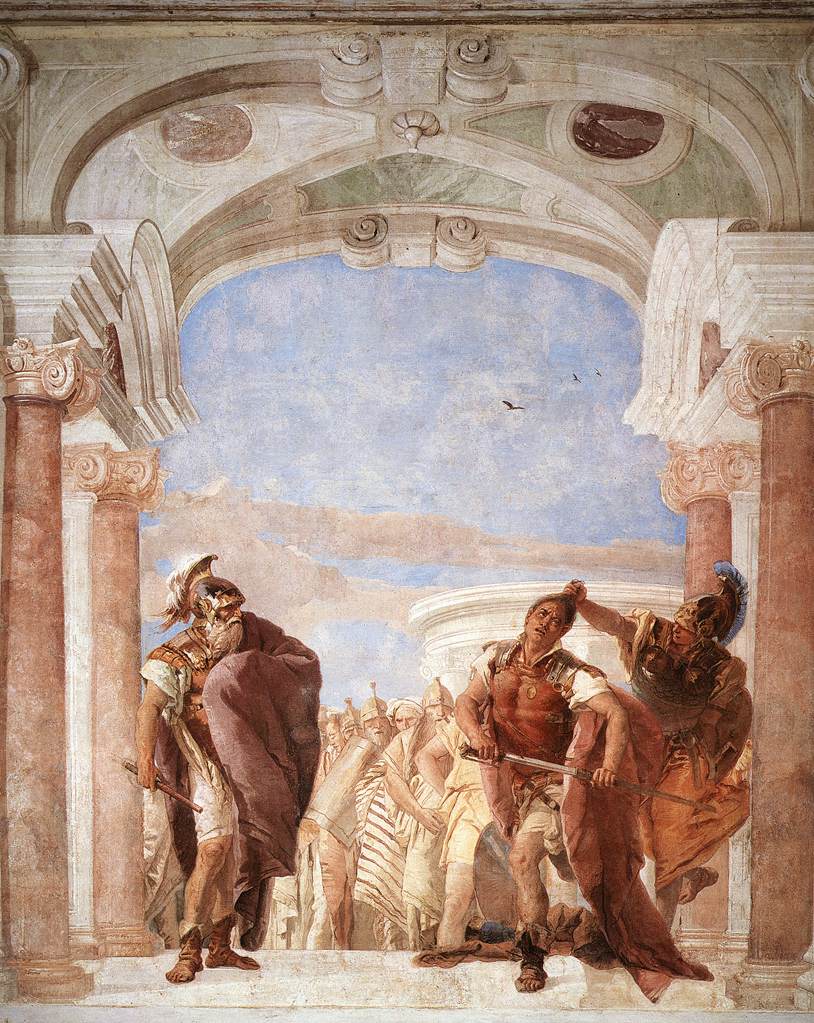
(externalImage Anger "http://upload.wikimedia.org/wikipedia/commons/1/1f/ The_Rage_of_Achilles_by_Giovanni_Battista_Tiepolo.jpeg") pictureList.kif 5851-5851 Anger is an instance of emotional state
(externalImage Anger "http://upload.wikimedia.org/wikipedia/en/5/54/FLAXMAN_John_The_Fury_Of_Athamas.jpg") pictureList.kif 6078-6078 Anger is an instance of emotional state

appearance as argument number 2
-------------------------


(termFormat ChineseTraditionalLanguage Anger "憤怒") domainEnglishFormat.kif 7464-7464
(termFormat ChineseLanguage Anger "愤怒") domainEnglishFormat.kif 7465-7465
(subAttribute Annoyance Anger) emotion.kif 678-678 Annoyance is a subattribute of anger
(termFormat GermanLanguage Anger "wut") emotion.kif 1365-1365 Annoyance is a subattribute of anger
(termFormat SpanishLanguage Anger "ira") emotion.kif 1366-1366 Annoyance is a subattribute of anger
(utterance EnglishLanguage Anger "angry") emotion.kif 1367-1367 utterance english language, anger and "angry"
(termFormat EnglishLanguage Anger "anger") emotion.kif 1368-1368 utterance english language, anger and "angry"
(termFormat FrenchLanguage Anger "colère") emotion.kif 1369-1369 utterance english language, anger and "angry"
(subAttribute Rage Anger) emotion.kif 1486-1486 Rage is a subattribute of anger
(subAttribute Fury Anger) emotion.kif 1757-1757 Fury is a subattribute of anger
(relatedInternalConcept AngryFacialExpression Anger) emotion.kif 2096-2096 Angry facial expression is internally related to anger
(relatedInternalConcept AngryVoiceUtterance Anger) emotion.kif 2797-2797 Angry voice utterance is internally related to anger

antecedent
-------------------------


(=>
    (attribute ?PERSON Anger)
    (exists (?PROP)
        (disapproves ?PERSON ?PROP)))
emotion.kif 1371-1374 If anger is an attribute of X, then there exists Y such that Y is a disapproves of X
(=>
    (attribute ?A Anger)
    (attribute ?A Unhappiness))
emotion.kif 1376-1378 If anger is an attribute of X, then unhappiness is an attribute of X
(=>
    (holdsDuring ?T
        (attribute ?A Anger))
    (modalAttribute
        (exists (?HF)
            (and
                (instance ?HF AngryFacialExpression)
                (experiencer ?HF ?A)
                (during
                    (WhenFn ?HF) ?T))) Likely))
emotion.kif 2103-2112 If anger is an attribute of X holds during Y, then the statement there exists Z such that Z is an instance of angry facial expression, X experiences Z, and the time of existence of Z takes place during Y has the modal force of likely

consequent
-------------------------


(=>
    (and
        (instance ?PV PhysicalViolence)
        (agent ?PV ?A))
    (modalAttribute
        (holdsDuring
            (WhenFn ?PV)
            (attribute ?A Anger)) Likely))
emotion.kif 2481-2489 If X is an instance of violence and Y is an agent of X, then the statement anger is an attribute of Y holds during the time of existence of X has the modal force of likely
(=>
    (and
        (instance ?AVU AngryVoiceUtterance)
        (agent ?AVU ?A))
    (modalAttribute
        (causesProposition
            (exists (?ANG)
                (and
                    (instance ?ANG Anger)
                    (experiencer ?ANG ?A)))
            (and
                (instance ?AVU AngryVoiceUtterance)
                (agent ?AVU ?A))) Likely))
emotion.kif 2800-2813 If X is an instance of angry voice utterance and Y is an agent of X, then the statement X is an instance of angry voice utterance, Y is an agent of X is a causes proposition of there exists Z such that Z is an instance of anger, and Y experiences Z has the modal force of likely


Show full definition with tree view
Show simplified definition (without tree view)
Show simplified definition (with tree view)


Sigma web home      Suggested Upper Merged Ontology (SUMO) web home
Sigma version 3.0.0-0a80e6c8 (2026-05-12) is open source software produced by Articulate Software and its partners